50 Things I Learned About Japan

If you are planning to visit Japan soon, you probably have a number of questions about the country. Simply put, Japan has a lot going on.

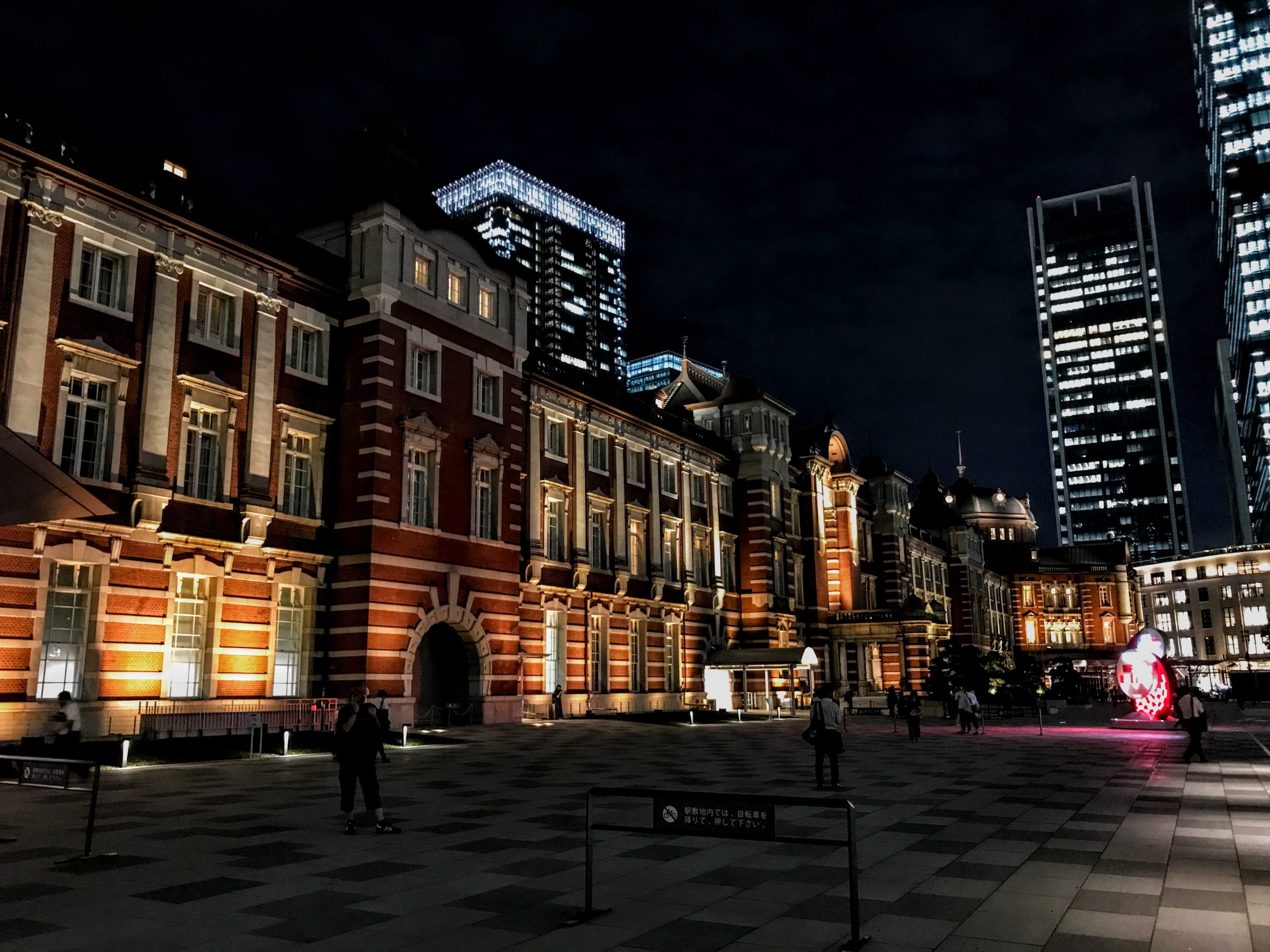
Tokyo-Station
The impressive Tokyo Station

Recently, I had a chance to visit Japan and spend a few days in Tokyo and Kyoto. You can check out my impressions of Tokyo, in this post titled Take me to Tokyo. As a first-time visitor to Japan, I figured that prospective visitors to Japan could benefit from my learnings.

So, here are 50 things I learned about Japan.

1. Haneda International Airport, Tokyo is closer to the city than Narita International.

2. Haneda offers convenient and affordable (under US$10) public transportation that connects to the Japan Rail System. Airport Limousine is a reasonably priced alternative option (under $15.) You can also hail a taxi (approximately $90) to the city (Tokyo Station.)

3. An IC (Integrated Chip) Card lets you breeze through subway stations and also pay for small purchases without worrying about cash. I bought a Pasmo card from Haneda Airport. You can find more details here.

4. Do your research before investing in a JR pass. If your travel is limited to Tokyo, you may not need it.

5. Cash is king. Many taxis and small stores do not accept credit cards. Make sure you carry enough money to get you by. One thousand Japanese yen is approximately $10.

Shinagawa Station
Shinagawa Station, Tokyo

6. It’s best to avoid Tokyo subway during the rush hour; you don’t want to be pushed into a subway car by a professional pusher.

7. If you are traveling with large suitcases, give the Tokyo subway a pass during the rush hour. You barely have enough space to put your feet down.

8. Tokyo hotels can be expensive. Three to four-star hotels fall in the $200 – $350 range. If you have travel points that you can use towards hotels, Tokyo is a good city to use it. I managed to get three free days using my travel loyalty points.

9. Breakfast at hotels, especially breakfast buffets, can be expensive. If you are looking for alternatives, take a walk to the nearest subway station and explore your options.

10. If eating sushi and congee for breakfast is not your thing, you can find McDonald’s, Wendy’s, or Burger King outlets scattered around the city.

11. Japan has over twenty thousand 7-Eleven stores that are open 7/24/365. Unlike North America, the stores offer a wide array of food choices. Not convinced? Check out this link. International ATMs and Wi-Fi services are also available at 7-Eleven stores.

12. FamilyMart and Lawson are convenience stores that offer products and services similar to 7-Eleven.

13. The Japanese prefer a High ball (whiskey & soda over ice in a tall glass) to beer. If you insist on drinking sake in Japan, you can try a sake highball.

14. You can eat sushi with your hands. However, sashimi has to be eaten with chopsticks. Here is a link to sushi etiquette.

15. If you have always deferred to cutlery over chopsticks at Japanese and Chinese restaurants, you may want to spend some time honing your chopsticks skills. Forks are hard to come by (not impossible) in small izakayas and bars. Not sure if carrying your own would offend the establishment you are dining at.

Izakayas and Bars Tokyo

16. Many small bars and izakayas prefer the local regulars over foreigners. Some bars have clear signs that discourage non-Japanese from wandering into their establishments. If you want to visit some of the local haunts, you may want to try a food tour in Tokyo. We used Arigato Food Tours in Tokyo.

17. Real sushi enthusiasts do not drink alcohol with their sushi. Alcohol is consumed before or after the meal.

18. Almost all dining establishments offer you wet napkins as you settle in. The idea is to wash your hands before you start eating.

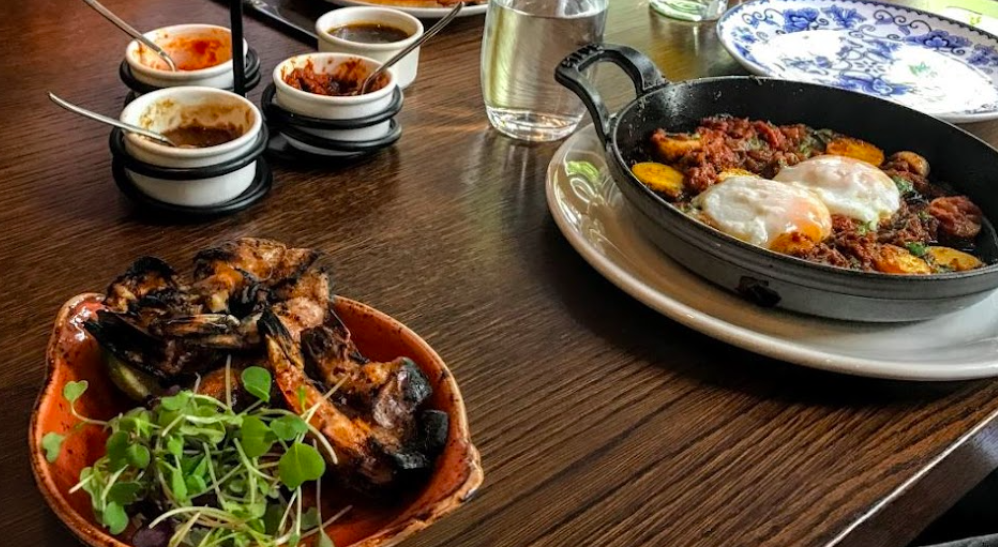
19. In Japan, you will never run out of food options. In my view, they can be primarily classified as raw, skewered, steamed, boiled, fried, stuffed, soups, and curry. Here is a list of some of the more popular food options in Japan.

20. If you are buying packaged food to take home as souvenirs, check the expiry date. Many of them have short shelf lives. Typically, the store clerk will point this out to you without you asking.

21. Train and subway stations in Japan are major destinations for food purchases and restaurants. Considering that the Japanese spend a significant part of their lives in subway stations, this makes total sense.

22. Tokyo Station, one of the larger Metro and Shinkansen stops in Tokyo, is the biggest railway station that I have ever been to in my life. If you think Grand Central Station in New York is big, you should check out Tokyo Station.

23. If you think you know bento boxes, you should check out your options in Japan. Bento boxes are the go-to food option for many office goers and commuters in Japan. In a way, it reminded me of the thali meals you get in South India.

24. Japan has the largest number of vending machines in the world — over five million of them. You can use your IC card to purchase several things you may need (and some that you may not need) from these vending machines.

25. Tipping is uncommon in Japan. When checking into my hotel, I attempted to tip the Bellboy who brought my bags up; he politely refused. I didn’t try it again.

A set meal in Kyoto
Set meals are a thing in Japan

26. I am not sure if Japanese Curry has always been a thing. It is not as rich and buttery as butter chicken and less spicy than a South Indian curry. You can even get curry with steaks. Forget the peppercorn sauce, go for the curry.

27. Who eats red bean paste? The Japanese do, mainly in their sweets. If you have the chance, try Ningyo-yaki during your visit to Asakusa and Yatsuhashi in Kyoto.

28. Planning to hit a few bars while in Japan? You may want to follow some basic guidelines.

29. English is not as prevalent as you would think. Google Translate (text or voice) can come in handy when trying to communicate with someone on the street.

30. Google Maps won’t be much help for directions since “Head southeast toward 明治通り/都道305号” or “Turn left toward 六本木通り/都道412号” won’t make a lot of sense unless you can read Kana and Kanji characters.

31. Unless you are on a major street, you will not see street signs in English which can get a little frustrating when you are trying to get from one point to another.

32. People on the street strictly follow pedestrian “walk” signs. Even on smaller roads, people patiently wait for the light to change before stepping on to the street. New Yorkers and Montrealers would probably struggle with this.

33. Google Maps will come in handy when figuring out the subway service. The app identifies your platform, your connections, and the schedules for you.

34. If you tapped your IC card/ticket and entered the wrong platform, you cannot tap out. You have to have the station attendant let you out.

35. If you ever need police assistance, look for the Koban sign outside metro stations.

Tokyo Temple

36. Japan has a large number of Shinto shrines and Buddhist temples. A visit to a temple or two should be part of your Japan agenda. You should be aware that there are restrictions around photography in certain areas of the temples and shrines.

37. The Japanese prefer to bow to show their respect for you versus shaking your hand. When to bow and how much to bow can be tricky. I generally got by with a smile and a slight nod-bow of my head. Here is a link to the etiquette of bowing.

38. If you want to walk around the city in a kimono or yukata, there are many Kimono rental shops around the temple areas. Most people that you find wearing kimono and walking around the city are tourists. So why not you?

39. Japan is big on punctuality. The Shinkansen service has a recorded average annual delay of 54 seconds per train! If you are over five minutes late for an appointment, you will likely be considered a “no show.”

40. Shinkansen trains are not big on luggage space. If you happen to have two seats together, you can fit a mid-size suitcase between the two seats. With the Attendant’s permission, you are allowed to store your bags behind the last row of your coach.

41. If you are a smoker, look for enclosed designated smoking areas outside subway stations.

42. Do not forget to pack an umbrella and a light backpack to put them in. Rains can be unpredictable in Japan.

43. There are no garbage bins in public areas in Tokyo. You will find them in restrooms at stations and eating establishments. Yet, there is zero litter on the streets. The Japanese carry around their trash till they can find a garbage bin, or take it home to throw it away with their domestic garbage. You may want to carry around a small plastic bag in your backpack for the same purpose.

44. Electronic toilets can be intimidating if you attempt to figure out all the images depicted on keypads adjacent to the toilet bowls. If you don’t want to experiment, there is always toilet paper and a handle for the flush.

45. Ever wonder why everyone who visited Japan brought home a paper fan? It gets really hot and humid in Japan, even in September. Pick your clothes accordingly.

46. For shopping, Japan is not cheap. Lower priced goods are mostly made in China. If you enter a fitting room in a clothing store, you are expected to remove your footwear. Ladies trying out tops are given face covers to ensure that their makeup does not stain the clothes that they are trying on. Unlike other Asian countries, prices are — mostly — fixed in Japan. No bargaining.

47. Talking about taxi etiquette may sound trivial. However, in Japan, most taxis have doors that open automatically at the discretion of the driver. It is considered impolite to try and open the door yourself.

 48. If you are buying electronic goods, make sure they come with English instructions. Generally, the instructions come in Japanese.

49. If you think Torontonians like to line up for things, you should see the lineups in Japan. People lining up to board the subway or to enter a restaurant is a common sight in Japan.

50. If you want to take a souvenir home but can’t decide on one, pick up a few bars of Kit Kat chocolates. Japanese believe that Kit Kat bars bring them good luck, and Nestlé has capitalized on it by introducing nearly 200 flavors that are available only in Japan. I bought wasabi and banana.

So, there. Hopefully, this helps.

If you have suggestions, please submit them through comments. I will add them to the list.

Category: Travel

  • 50 Things I Learned About Japan
    50 Things I Learned About Japan

    If you are planning to visit Japan soon, you probably have a number of questions about the country. Simply put, Japan has a lot going on. Recently, I had a chance to visit Japan and spend a few days in Tokyo and Kyoto. You can check out my impressions of Tokyo, in this post titled…

  • Take Me to Tokyo!
    Take Me to Tokyo!

    As we settled into our seats in the Friendly Airport Limousine, I realized that I had stressed for no reason. Before boarding my flight to Tokyo, I had made a mental list of the things that I would have to do upon clearing customs at the airport — withdraw yen from an ATM, buy an…

  • Los Angeles – An Unusual SoCal Experience

    I had expected it to be big. It was. The villa had seven bedrooms and seven baths spread over 11,000 square feet. I have been to a few big homes in my time; but, this one took the cake. I reminded myself; I am in Bel-Air, Los Angeles. Exclusivity and excess go hand in hand…

  • A Look Back at a Stopover in Colombo
    A Look Back at a Stopover in Colombo

    It’s no mean feat: Sri Lanka topped the list of Lonely Planet’s countries to visit in 2019. To appreciate the scope of this achievement, you have to put it in perspective. Countries big and small around the world are vying to catch tourists’ fancy through impressive marketing campaigns, and unique value propositions. In Asia alone,…

  • Luxury Brands and Services Are Targeting the HENRYs
    Luxury Brands and Services Are Targeting the HENRYs

    As the Uber driver dropped us off, I wondered if we had the address wrong. We were looking for the entrance to a cocktail bar that my daughter had categorized as “secret.” My wife and I were back in San Francisco for the long weekend. The plan was to have a couple of pre-dinner drinks…

  • Don’t Walk Left – A Perspective on Homelessness
    Don’t Walk Left – A Perspective on Homelessness

    I could see her from a distance.  For that matter, I wasn’t sure that it was a woman until she briefly lifted her head to tuck her straggly hair back behind her ear. She didn’t look a lot older than my daughter. She was bent over the garbage bin by the roadside. Looking for food,…

  • Scotland: Beyond Single Malts, Shortbread, and Scarves
    Scotland: Beyond Single Malts, Shortbread, and Scarves

    “There are no foreign lands. It is the traveler only who is foreign.” Robert Louis Stevenson. My Scotland experience started the minute I hopped onto a taxi outside Edinburgh airport. “The Glasshouse Hotel please,” I told the driver as I settled into the backseat of the cab. “Ach aye,” came the reply. As he started…

  • Dublin – There isn’t much not to like
    Dublin – There isn’t much not to like

    My flight from Toronto to Dublin is full. As I settle down into my seat, I notice that my co-passengers are predominantly white and middle-aged. It isn’t a typical transatlantic flight where you find an eclectic mix of travelers. Toronto’s multicultural demography ensures that.   It does not take long for me to figure out…

  • San Francisco – A City of Parties, Parks, and Protests
    San Francisco – A City of Parties, Parks, and Protests

    The vestiges of the hippie movement are everywhere as I walk down Haight Street in San Francisco. It’s the 41st Haight-Ashbury Street Fair — the annual fair where people come together to remember and celebrate the “Summer of Love.” Pop-up stores peddle psychedelic wear and trinkets to middle-aged tourists who are here to relive the…

  • Budapest – A Fascinating Tale of Two Towns
    Budapest – A Fascinating Tale of Two Towns

    Budapest is a tale of two towns, Buda and Pest. Looking down at Pest from the Buda side is like old money looking down on the nouveau riche. To its residents, Buda is the classier side of the city. After all, the Buda Castle and many of the city’s attractions such as Fisherman’s Bastion and…